The Wild Fires in 1871 in Michigan
October 8, 1871 was a horrific day for the mid-western states of Michigan, Wisconsin and Illinois. After an extremely dry summer in 1871, a wildfire driven by high winds erupted in Peshtigo, Wisconsin, killing 1300 people in one evening and burning over 1,100,000 acres in Wisconsin and the Upper Peninsula of Michigan before it burned itself out. The same night the famous Great Chicago Fire erupted which burned three square miles of the City of Chicago., killing about 300 people and leaving over 100,000 people homeless. And on the very same evening in the lower peninsula of Michigan, another wildfire began it’s race across the state from Lake Michigan to Lake Huron.
In the 1830’s logging was a significant industry in Michigan. There were sixteen large sawmill operations running in the state by the mid 1850’s and the area known as the “thumb” was in the midst of a logging boom. They were logging White Pine tree which were 150 feet tall and 5 foot in diameter. This type of operation left behind branches, bark and other wood material known as slash which became fuel for fires.
Often they would use small fires to burn stumps and slash. These slash fires were started by farmers or loggers and often were left simmering for weeks as the stumps of the trees burned. It was these types of fires which flared up and explosively ignited when atmospheric conditions were exactly correct to brew a wildfire. A hot wave of gale force wind came roaring up from the southwest reaching speeds of a tornado. It was a gigantic blow-pipe which fed oxygen to the flames and erupting into a massive wildfire that raced like a monster across the state.
On the eastern shore of Lake Michigan, the towns of Holland and Manistee, had large sawmill operations. The logs were brought down from the interior of the state to be cut into lumber to be shipped to locations throughout the country. Both cities had harbors which enable the lumber to be easily transported to areas of the country where it was needed for building homes, businesses and factories. These numerous mills were surrounded by great quantities of highly flammable material. Edgings and bark had accumulated in bulk; large piles of sawed lumber were stored in the lumber yards, the streets were paved with sawdust and slabs of wood.
The city of Holland, in the south of the state and the city of Manistee, one hundred and thirteen miles to the north, were destroyed by the fire. From there the massive wall of flames extended almost due eastward through the counties of Lake, Osceola, Isabella, Midland, Saginaw, Tuscola, Sanilac and Huron, where its furthest progress was eventually stopped by the waters of Lake Huron.
As the fires raged across the state, they burned everything in their path. The crops which had already been taken out of the fields, the fields which had not been harvested yet and barns full of live stock. All were destroyed, dwellings, farms, schools, churches, businesses, bridges, nothing was spared. While this zone of flame stretched across the state, it seemed to work its greatest havoc as it approached Lake Huron.
Huron and Sanilac counties, though largely devoted to lumbering, were nevertheless, quite well settled by an agricultural population and abounded in prosperous and well cultivated farms and orchards. Blinded by smoke and stifled by the approaching rush of flames, the inhabitants hid in wells, cisterns and ditches, or fled in terror to the lake shore, where they saved themselves by wading into the water up to their necks. Along the Lake Huron shore or near it were the following villages of two hundred to six hundred inhabitants: Glen Haven, White Rock, Forestville, Sand Beach, Port Hope, Elm Creek, Huron City, Forest Bay, Center Harbor, Rock Falls, Verona Mills. These villages were almost wholly obliterated and the people who lived in them, if they survived, were left entirely destitute, without food and with only the clothing which they wore.
All these family were left to start their lives over. Most of them found it necessary to leave the area to find homes and sustenance for the coming winter in other locations. It is hard to know how many people died. Some estimates say less than 500 but there were hundreds of lumber jacks and sales personal in the area daily not to mention people who lived in remotes areas of the counties which made it nearly impossible to know how many souls were lost.

Robert Wesley Hayner
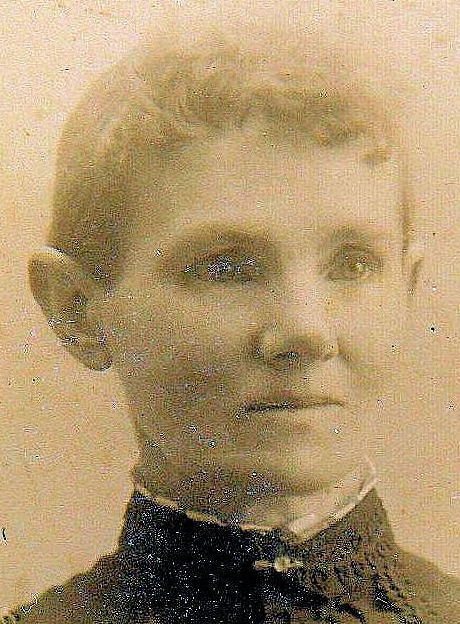
Dorothy Ann Morgan Hayner
My two times great grandparents, Robert Wesley and Dorothy Ann (Morgan) Hayner were one of these families. Robert Wesley, Dorothy and their daughter, Addie Jane were recorded in the 1870 Federal Census as living in the village of Port Hope, Huron County, Michigan. The town that one short year later would burn to the ground. My great grandmother, Mary Morgan Hayner was born in what was left of Port Hope on October 21, 1871. The fires which decimate the area burn until October 19, 1871. It is hard for me to imagine what a pregnant Dorothy, Addie Jane, (a toddler daughter) and Robert Wesley must have gone thru in the days just before Mary Morgan was born. I can’t help but wonder what they did to survive this horrific event. Where did they go after it was all done. Surely they could not stay in Port Hope. Robert Wesley had brothers in the towns of Port Huron and Romeo so I can only assume that they must have fled to live with family in areas not effected by this tragic fire. I have not found them in the 1880 Federal Census but Dorothy is found in Detroit as a widow around 1900.

Mary Morgan Hayner born October 21, 1871
Once again, I have another family story that I wish had been recorded and communicated. I wish I could have an hour to talk to Robert Wesley to ask him how he protected his family. Or to have a cup of tea with Dorothy and to talk to her about how she felt and what she did to protect Addie and her unborn child, Mary. It is amazing to look back 149 years and see the dangers that each of these families faced.
The content of this blog was used on a different site a few years ago…. When I first wrote this blog, I talked about how different the dangers that a family faced in 1871 were from the dangers we face today. But ironically the fires in 2020 in Australia, made me think of the fires that ravaged Michigan so long ago and made me realize that these dangers are not so different after all. When all the conditions are right, Mother Nature can create the perfect storm.
Happy Hunting,
Jan
 Needles in a Haystack
I had never read or heard about these fires. The Chicago fire is well known, but somehow the lumber fires that affected so many people and small towns are not… How does that happen? Thank you for sharing.
LikeLike
You are welcome. Yes it is a shame, isn’t it?
Then here we are today with sometimes a huge over load of data. It is crazy how the world has changed.
LikeLike