52 Ancestors in 52 Weeks – Week 8 – Part 2
Another look at Prosperity ….
Back in the winter of 2017, I came across an a smart phone app that I thought might help me break through some of the brick walls which i had in my family history research. Some where in my research I came across a blog post which talked about a new smart phone app that Ancestry had made available, called “We’re Related”.
At this time in my research I had hit a lull. I was not finding much in the way of new information. I just was not making much headway with my research. It seemed as though I kept looking at the same data over and over again.
SO I looked into the new app. I discovered that it was a data crawler type application. When I worked in the computer industry, programmers used them to search for data in a company network or on the internet. The program looks at a set block of data, in this case, your family tree, and searches all the databases it can find for any data that matches the data in your tree and then reports the matches back to you.
So I loaded the app on my phone and started it. The criteria was that you need a smart phone with the “We’re Related” app loaded, an active Ancestry.com account and a family tree loaded on Ancestry. So I got my most current family tree loaded. I had always used my father as my home person in my tree. Well, that played havoc with the app and made it difficult for me to know who was related to who so after a few weeks of running the app, I made the home person ME and restarted the app and the data began to flood in.
At first I was able to look at the data as I got it, do a bit of research and I could tell if it was accurate or not. One database that is used for the comparison comes from user submitted family trees. Some user trees have mistakes in them. You must always double check data for accuracy. What I liked about the data that I received was that it gave me clear paths for research. It would give me a linage of a famous person and it would show me how the app determined how I may be potentially related to them. I was able to prove the accuracy of the data or in some cases disprove the connection.
Now at this point I need to remind you that the search algorithm will continually search. Eventually, I was receiving so much data, I could not keep up . I started a spreadsheet. I put all the Maternal data in one and the Paternal data in another and I based my daily research on data from these spreadsheets. As time went on my hits did become less frequent but I still got some weekly.
I knew that I was not the only researcher using this tool and I could not help but wonder what all these data crawler search algorithms were doing to the Ancestry.com databases and their network. I presumed that it was this app that assisted in the research that was being used for the Television show “Who do You Think You Are?”
My interest was not so much in the famous people that I was possibly related to, though it was mildly amusing, my interest was in the people within my linage that they identified but I had not found yet. It was these people who were my brick walls and with this new information I was able to break down some of those walls. It was these people that I focused my day to day research on, proving that I was or was not related to them.
Last summer I finally replaced my old smart phone with a new one. When I went to the app store to look for the “We’re Related” app, it was no longer available. My search algorithm and all of the hundreds of thousand of others must have been too much for Ancestry’s network. BUT I have a spreadsheets of data that I have saved that I still use for research.
Listed here are a few of the families connections that I have found through the use of the “We’re Related “ App. They are early Colonial Family who go back to nobility in England, Ireland and Scotland. They are on both sides of my family. They were prominent colonial families in these early settlements and some were appointed to leadership positions in the early colonial government.

Governor William Leete (1612-1683)
William Leete (1612-1683) was one of these early setters. He arrived with Rev Whitefield’s company and was one of the early Plantation Covenant signers while still aboard the ship on June 1, 1639. They arrived in New Haven (Connecticut) a month later on July 1. He was one of six men selected to negotiate a land treaty with the native tribes for the purchase of the land for the new settlement. The new settlement consisted of several planned plantations.
William was called upon to serve many public offices in the early colonial settlements which later became Connecticut. He was the clerk of the New Haven plantation from 1639 – 1662. He was appointed as a deputy to the colonial court representing the plantation of Guilford until 1650 and was then appointed magistrate of Guilford from 1651-1658. In 1658, he was appointed Deputy Governor until he was elected Governor of the plantation in 1661. He held the office until 1664 when the plantations of Guilford, Stamford, Milford, New Haven and several others, merged and became the colony of Connecticut. After these plantations merged, he served as an assistant until he was elected as deputy governor. He was elected as Governor in 1669 and served in that capacity until his death in 1683. This family connection is on the father’s side of the family.
While investigating the Leete side of my family, I found church records which enabled research to date back several more generations in England. William’ s 2X Great Grandfather is Thomas Leete(1520-1582) he was married to Lady Dorothy of Warde. (1528-1587) It is because of the connection to nobility that ensures that there are records that can be found. Thomas and Dorothy are my 12 times Great Grandparents.
Thomas Leete(1520-1582) => Thomas Leete(1554-1616) => John Leete (1575-1648) => Governor William Leete (1612-1683) => Andrew Leete => (1643-1702) => William Leete (1671-1736) => Roland Leete (1708-1767) => Ashel Leete => (1755-1791) => Jonathan Leete (1775-1861) => Nancy Leete (1814-1900) => Austin Boyer (1848-1908) => Mae Eveleen Boyer (1883-1914) => Lillian Losee (1905-1980) = Harold Smith (1929-1996) => Janet L Smith.
In this same area of Connecticut in the same time period as Governor William Leete, I have found several lines of my Mother’s family as well. I have spent considerable time researching the Reynolds family connection.

George Reynolds was an interesting character who is well researched. His life was documented by his youngest son, Jay Lincoln Reynolds. My family descends from Georges oldest daughter, Sarah Louise Reynolds Densmore, who was 22 years older than Jay Lincoln, her brother. George ‘s wife, Margaret, died when the youngest son, Jay, was four years old. Jay Lincoln spent much of his young life being raised by older sisters. He spent months and sometimes years with each of his sister and blended into their families. He had frequent visits from his father and as a preteen he returned to the live with him during the final years of George’s life. The eleven year old Jay and his eighty year old father cared for each other. It was of this time period that Jay Lincoln fondly, chronicled his fathers life.
The Reynolds family is traced back to my 9th Great Grandfather, George Reynolds born in 1555 in Kent, England. His son, John Reynolds came to America as a freeman in 1635. He settled in Watertown, Massachusetts before leaving to settle in Stamford, Connecticut within a year or two of his arrival. The “We’re Related” app was my connecting source which enable me to validate the link back from William Reynolds to George Reynolds of 1555.
George Reynolds (1555-1634) => John Reynolds (1590-1664) => John Reynolds (1638-1701) => John Reynolds ( 1674-1750) => John Reynolds (1699-1789) => William Reynolds (1735-1810) => George S Reynolds (1774-1874) => Sarah Louise Reynolds (1836-1918) =>Charles Densmore (1864-1943=> Addie Densmore (1890-1955) => Leah Anderson (1928-2009) => Janet Smith
William Reynolds, my 4 X Great Grandfather and the father of George S Reynolds, was married to Elizabeth Mudge. Elizabeth’s family can be traced back to Jarvis Mudge who was born in England in 1608 came to America from England by the time of 1638 when his name is found in Court documents in Boston, Massachusetts. He was among the founding members of Hartford, Connecticut.
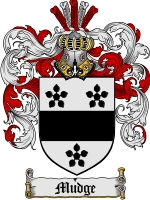
Elizabeth Mudge’s father was Micah Mudge and her mother was Lucy Spencer. The Spencer’s are well documented back to 1015AD. This is likely the same Spencer family that the Princess of Wales, Diana Spencer descends from. There are several databases who document Royal families and Nobility in Europe. One such database I could follow back to a thirty-three times Great Grandfather through this Spencer line. I found this interesting but the volume of work that it would take to prove its accuracy was daunting. I was able to prove the validity for several generation but have so much other work to proof that this can be left for a later date if I ever pursue it.
Micah Mudge’s Grandfather was Micah Mudges and his wife was Mary Alexander. Mary Alexander’s family come from the Alexander Noble family from southern Scotland. They family is well documented in the Royal database as well. They descend from the ancient McDonald clan who lived in southern Scotland near Edinburgh and Glasgow at the time of William the Conqueror.

SO as you can see that data crawler program spit out enormous amounts of data for me to work with. It did nothing for my biggest dilemma, my Smith Family! There are just too many of us. We are all common folks. We are not celebrities. We make up a vast population of people whose surname were derived from their occupation and it is known that immigrants who want to start over in American sometimes just declared themselves a “Smith”.
Happy Hunting,
Jan
 Needles in a Haystack
I never did try that app as I was afraid it was just a gimmick. Too late now. I’m glad you found a way to make it work for you!
LikeLike