Once again I have procrastinated this week. Last year we moved and we are still settling. I thought I knew where all my Genealogy stuff was but…I must have a box somewhere that still has files in it. I had some little notes that I want to use with this blog…but I can’t put my hands on it right now so I will lead in a little bit different direction.

This is a school picture from Wells County, Indiana. Everett is standing in the back row the fifth child from the right. I have sent out several emails trying to identify this school but so far not luck. This is likely 1911 or 1912. In the 1910 Federal Census, Everett and his family were living in rural Jefferson Township, Wells County, Indiana.

The second picture is probably from a Wells County School. It could be the same school but I can not be certain. The windows are a bit different between the two picture. It looks like there are four windows in a row where as the previous picture had windows in sets of two. When I asked my Grandfather where he grew up, he told me Roanoke, Indiana yet I never found them living in Roanoke. In the second picture Everett is seated on the ground in the front row in the center. He identified himself (or Grandma identified him) with the arrow on the picture. The family left Indiana in 1918 or 1919. If they left in 1918, Everett would have been 14 years old and likely have finished 8th grade. I wish I could ask him a few more questions.
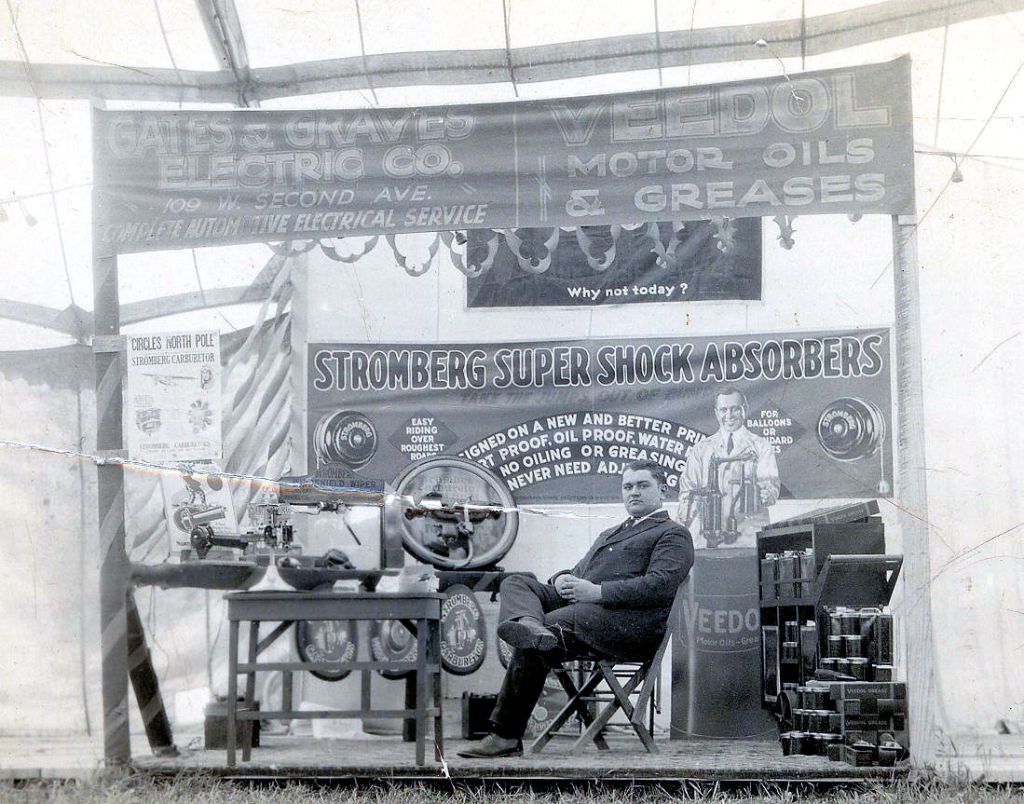
After leaving Indiana, Everett obtained employment in the Automotive Industry. He sold batteries and Electrical automotive parts. When Everett and Lillian married in 1923, He listed his occupation as a “Battery Man” on his marriage certificate. Seven years later at the time of the 1930 Federal Census, he was working for General Motors at the “Body Plant”.
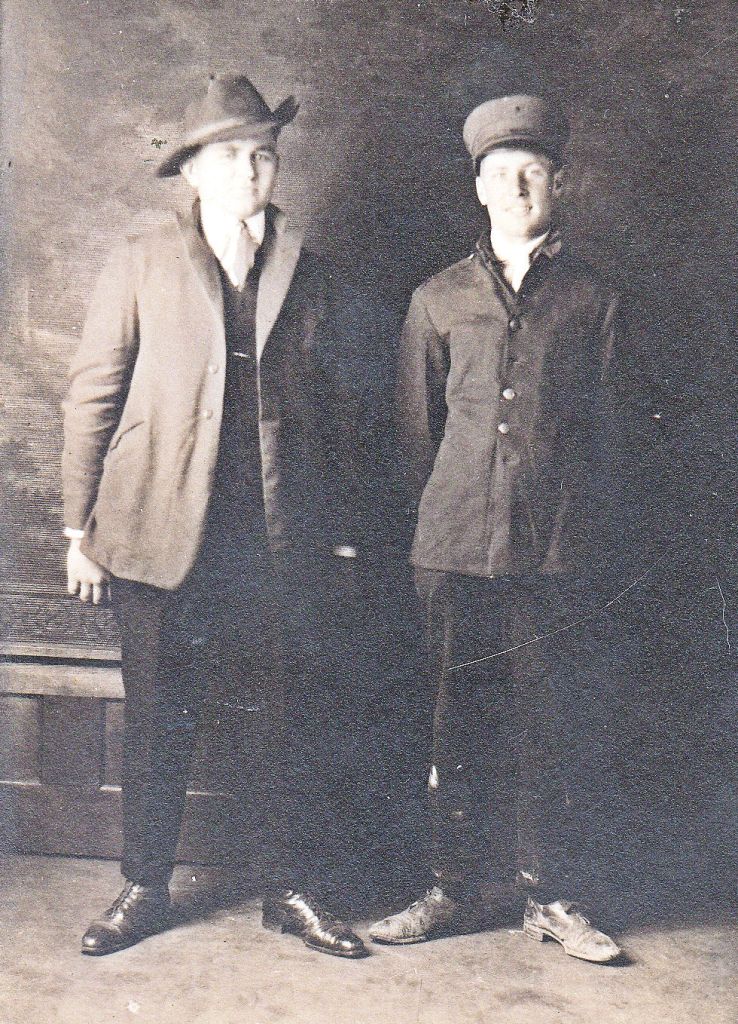
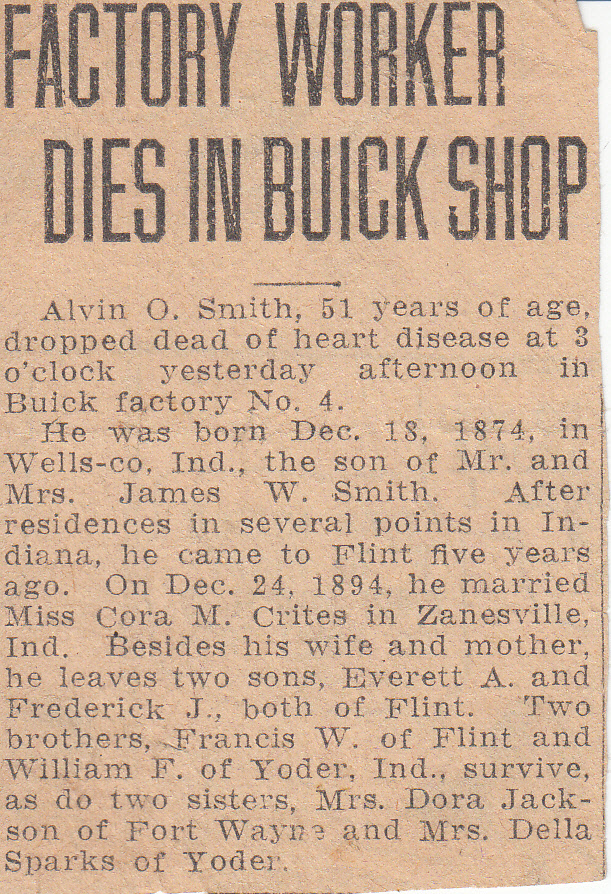
This picture identifies Everett on the left and a friend on the right at the “Body Plant” on Dort Highway in Flint, Michigan. In 1925, Everett’s father, Alvin, died of a heart attack while working on the factory line. Six years later his daughter, Lucille, died in January of 1931 after a short illness of Strep which went to her blood. These were troubling financial times with the stock market crash and a looming depression. Everett made the difficult decision to leave his family and go to college. It was time to make a change and he decided to become a minister. He went to Adrian Seminary for about one year while Lillian and Harold remained in Burton, Michigan near family. Everett wrote Lillian and Harold regularly sweet notes on post cards, which he stuffed in envelopes and mailed. But Everett felt that the security of the ministry was worth all the trouble. Lillian and Harold were being taken care of because they had family close by.
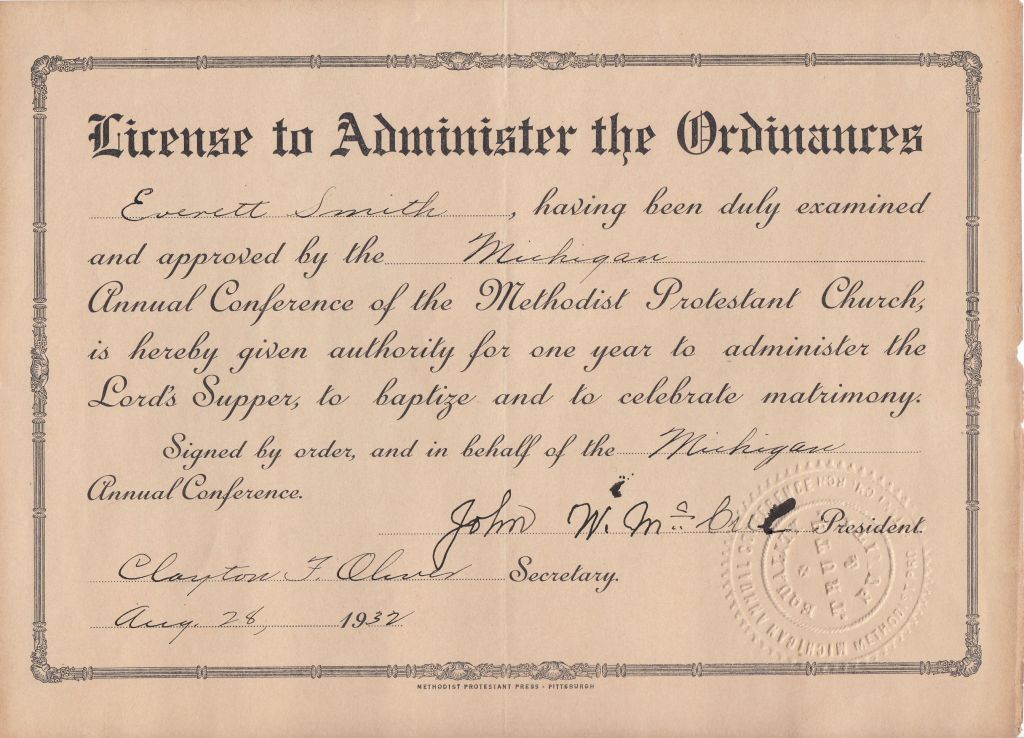
Everett received his license to practice as a Methodist Minister on August 28,1932. There will be a two year period where he practiced with a License before he could be officially Ordained as an Elder of the Methodist Church.
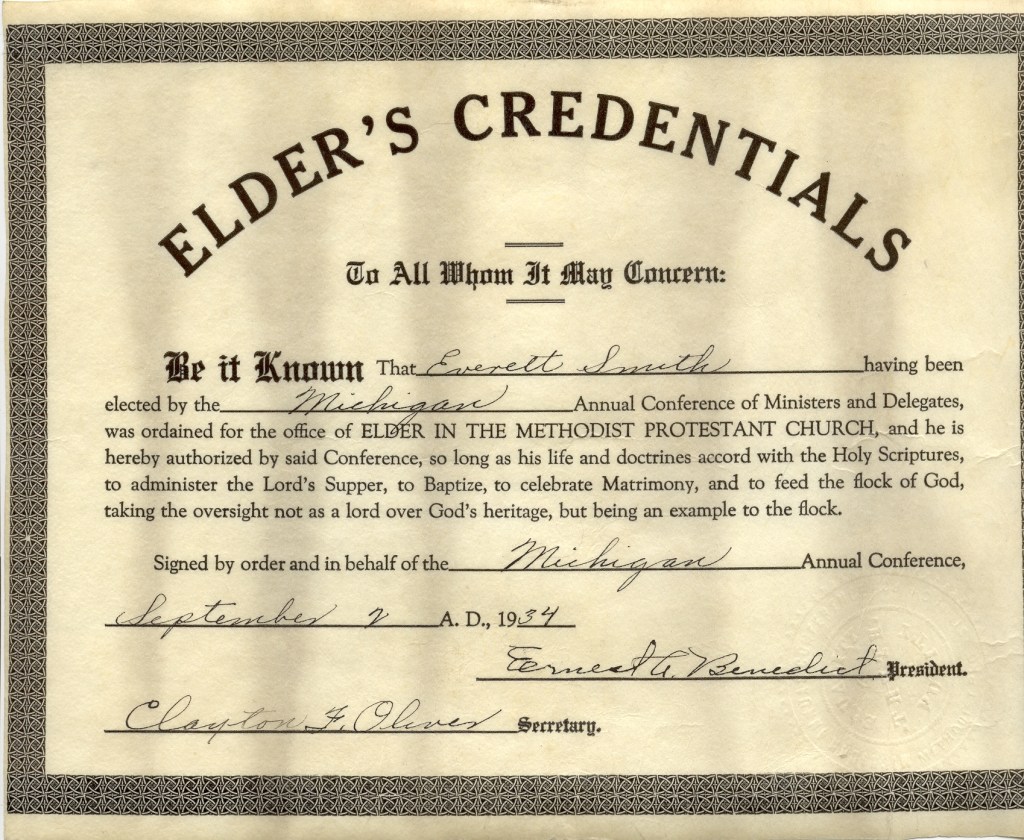
Everett was assigned to the Swartz Creek Unity Church and the Second Methodist in Flint for his first assignment. This brought him back to his family and the Flint area where they lived. By September 1, 1933, he was reassigned to the Genesee Methodist Church.
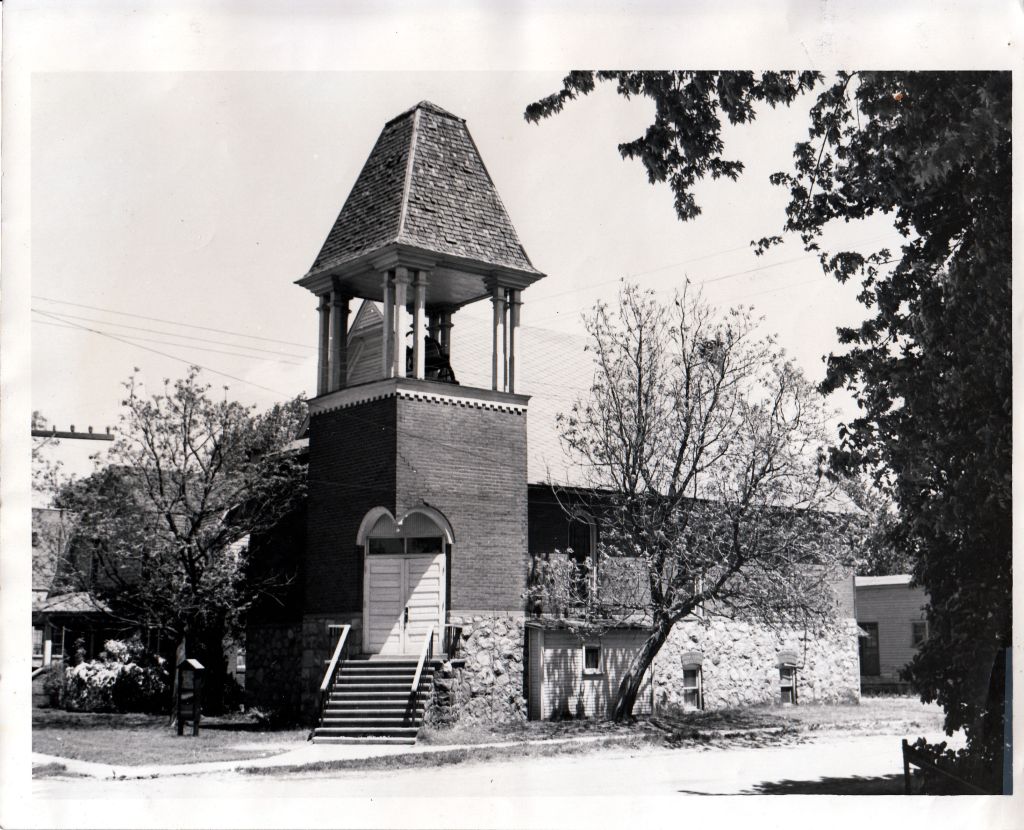
In September of 1936, the Richfield Church was added to his assignment. After extensive renovation of both the church and the parsonage at Genesee , a re-dedication service was held in 1940. In the Dedication program, Everett and his work were highly praised. Everett was very involved with local civic affairs and chairman of the Civil Defense Council of Genesee.
“The pastorate of the Rev. and Mrs Smith and son Harold have been a happy one. The Smiths Came in September of 1933. During those seven years, Rev Smith has lead the church in many projects that has not only served as a blessing to the church but to the entire community.”
In January of 1943, Everett and his family were called to the Marine City Methodist Church. A very reluctant Genesee Church sent a letter to the Marine City Church praising Everett’s abilities. The Genesee Church wanted Marine City to know what kind of a man they were getting and to be sure that Marine City knew that if they did not like him that Genesee wanted him back!!!
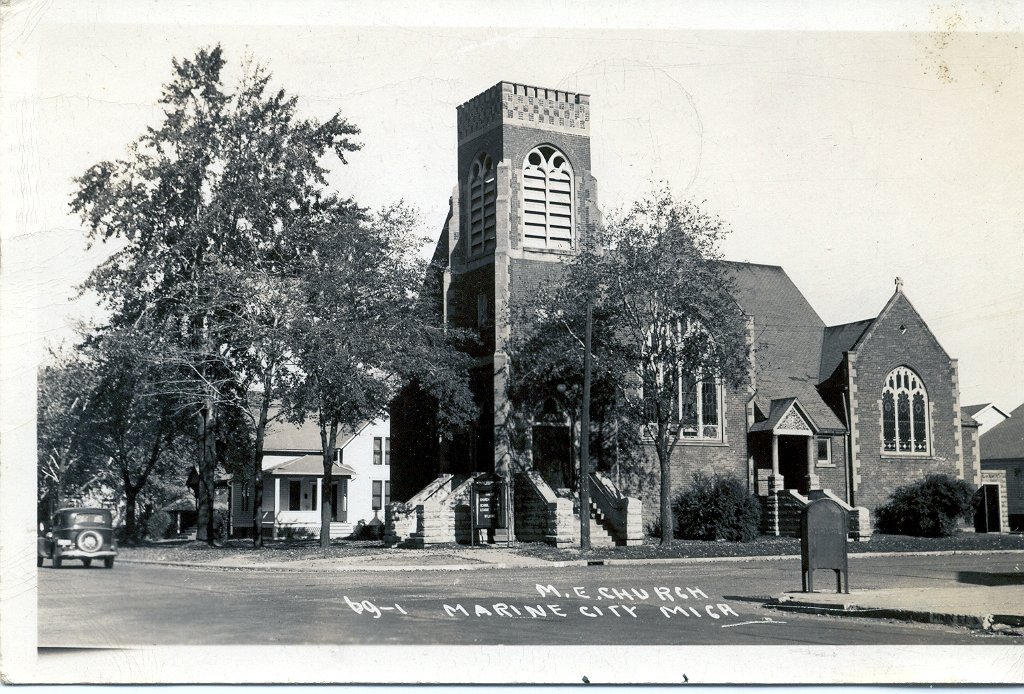
On January 24, 1943, Rev Everett Smith presided over the Marine City United Methodist Church for the first time. Almost one year later, on the night of January 22, 1944, a fire broke out in the furnace room. The fire spread through the walls and up to the roof. While Everett and Lillian were eating dinner a passerby knocked on the door to tell them that the church was on fire. The Fire Department, which was directly across the street, promptly arrive and began fighting the fire. The fire was mostly on the interior of the building with dense smoke which made it impossible to fighting from inside. A large amounts of water had to be poured on the church from the outside. When the flames were finally extinguished, the inside of the brick church was badly damaged, especially basement dining room, Community room, the organ and the tracery stained glass window on the Broadway Street side of the church. After surveying the damages, it was decided that the church would be rebuilt. The church did have insurance and most of the cost to rebuild was covered. The remaining funds were raised by fund raising events and donations. Services were held in St Mark’s Episcopal Church until September of 1944 when restoration was complete.
Everett, Lillian and Harold remained in Marine City until 1949 when they were called to move on to the Monroe Street Church in Lapeer, Michigan.

They would remain in Lapeer for the remainder of his career. He was always very active with the youth of the church and understood that they were the future of the church. He took a very active role in Summer Camps for young adult Christian kids. These camps were held at the Lakeport Methodist Camp along the shore of Lake Huron. Everett began going there with young adult groups when he was at the Marine City Church. In the Marine City days, the campers did many projects to help fix the camp and keep it updated. Around 1950, Grandpa and his campers built an amphitheater on the beach which was used for outdoor events for camps and retreats. It is still there today.
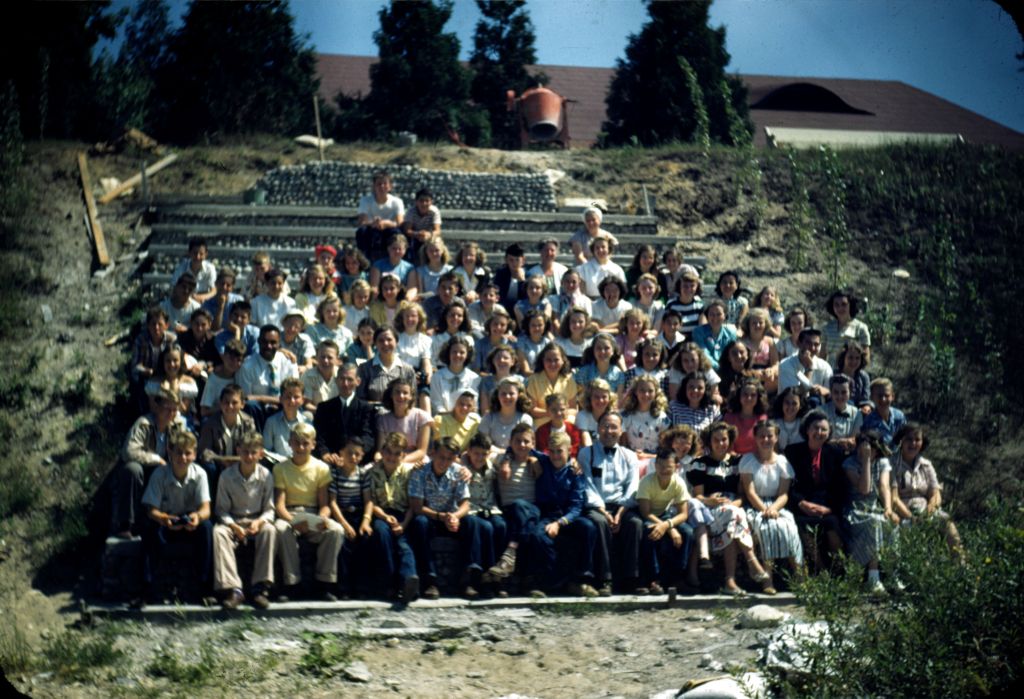
Sometime in early 1950, Everett was diagnosed with Multiple Sclerosis while he was serving in the Monroe Street Lapeer Church. At the time, this disease was new, hard to diagnostic and very misunderstood. There was little that they could do for him. He worked very hard in an effort to continue to use his limbs and be able to walk on his own. He told his wife, Lillian, that when he could no longer stand behind the pulpit, he could no longer be a minister. That day came in way too soon in 1956. He remained an assistant pastor for a time assisting Rev Lamb, who was assigned to the Lapeer Church after Everett stepped down. The Monroe Street Church had outgrown it’s building. The church bought 5 acres of land across the street from the Lapeer General Hospital on M-24 and broke ground. The new church was completed in 1960 and would be called Trinity Methodist Church.
When the Trinity Methodist Church was dedicated and the corner stone laid in September 15, 1960, my Grandfather spoke from behind the new pulpit. It was the only time I remember my Grandfather preaching. I was 5 years old. I could hardly see over the back of the pews, straining to sit up straight so I could see this man whose familiar voice billowed among the rafters of the brand new church. With the aid of a cane, he stood one last time behind a pulpit and delivered a sermon.
Everett and Lillian moved to a small house on Carlson Drive in Davison soon after the completion of the Trinity Church. The Trinity Methodist Church would always be their home church. Everett went to work for the Flint Radio Station WMPR. I spent a week with my them in either 1962 or 1963 during the summer. Everett no longer drove so Lillian took him to work and then returned at the end of his shift to bring him home. I rode along with her the week that I was visiting. The first day we pulled into the parking lot about 15 minutes before his four hour shift ended. She turned off engine but left the ignition. She turned on the radio to hear the end of his radio show. I sat in stunned silence, listening to my Grandfather voice as it drifted from the speaker of the car radio. I looked at Grandma with a wide eyed grin! “That’s Grandpa! ”, I exclaimed. “He must really be famous if he’s on the radio!” I said, which caused Grandma to chuckle.

For the remainder of the week I sat and listened to the daily hog, corn and bean report with renewed interest because the voice coming out of the radio was this famous man that I had known all my life! I learned a lot about farming and local news that week. On Friday, she let me go into the station with her to see Grandpa Everett as he worked. She made me promise that I would be quiet because after all they were “On Air”. I’ll never forget it. There he was in a room encased with glass windows. There was a lot of lights and dials, funny looking things on a table that he was sitting in front of. So many things that a seven year old had never seen before. A large shiny metal box was hanging from the ceiling, that he talked into. He was seated in a special chair and was wearing these funny things that covered his ears. There was a large red “Quiet, On Air” sign lite. I had never seen anything like it. He went on with his show never skipping a beat after we came into the station. He winked at me and gave me a quick smile.
It is quite evident that the trajectory of Everett’s life was radically changed by his choice at age 26 to go to college.
Happy Hunting,
Jan
#52Ancestors







 Needles in a Haystack