52 Ancestors in 52 weeks – Week 9 – Disaster

The Wild Fires in 1871 in Michigan

October 8, 1871 was a horrific day for the mid-western states of Michigan, Wisconsin and Illinois. After an extremely dry summer in 1871, a wildfire driven by high winds erupted in Peshtigo, Wisconsin, killing 1300 people in one evening and burning over 1,100,000 acres in Wisconsin and the Upper Peninsula of Michigan before it burned itself out. The same night the famous Great Chicago Fire erupted which burned three square miles of the City of Chicago., killing about 300 people and leaving over 100,000 people homeless. And on the very same evening in the lower peninsula of Michigan, another wildfire began it’s race across the state from Lake Michigan to Lake Huron.

In the 1830’s logging was a significant industry in Michigan. There were sixteen large sawmill operations running in the state by the mid 1850’s and the area known as the “thumb” was in the midst of a logging boom.   They were logging White Pine tree which were 150 feet tall and 5 foot in diameter. This type of operation left behind branches, bark and other wood material known as slash which became fuel for fires.

Often they would use small fires to burn stumps and slash.  These slash fires were started by farmers or loggers and often were left simmering for weeks as the stumps of the trees burned. It was these types of fires which flared up and explosively ignited when atmospheric conditions were exactly correct to brew a wildfire. A hot wave of gale force wind came roaring up from the southwest reaching speeds of a tornado. It was a gigantic blow-pipe which fed oxygen to the flames and erupting into a massive wildfire that raced like a monster across the state.

On the eastern shore of Lake Michigan, the towns of Holland and Manistee, had large sawmill operations. The logs were brought down from the interior of the state to be cut into lumber to be shipped to locations throughout the country. Both cities had harbors which enable the lumber to be easily transported to areas of the country where it was needed for building homes, businesses and factories. These numerous mills were surrounded by great quantities of highly flammable material. Edgings and bark had accumulated in bulk; large piles of sawed lumber were stored in the lumber yards, the streets were paved with sawdust and slabs of wood.

The city of Holland, in the south of the state and the city of Manistee, one hundred and thirteen miles to the north, were destroyed by the fire.  From there the massive wall of flames extended almost due eastward through the counties of Lake, Osceola, Isabella, Midland, Saginaw, Tuscola, Sanilac and Huron, where its furthest progress was eventually stopped by the waters of Lake Huron.

As the fires raged across the state, they burned everything in their path. The crops which had already been taken out of the fields, the fields which had not been harvested yet and barns full of live stock. All were destroyed, dwellings, farms, schools, churches, businesses, bridges, nothing was spared. While this zone of flame stretched across the state, it seemed to work its greatest havoc as it approached Lake Huron.

Huron and Sanilac counties, though largely devoted to lumbering, were nevertheless, quite well settled by an agricultural population and abounded in prosperous and well cultivated farms and orchards. Blinded by smoke and stifled by the approaching rush of flames, the inhabitants hid in wells, cisterns and ditches, or fled in terror to the lake shore, where they saved themselves by wading into the water up to their necks. Along the Lake Huron shore or near it were the following villages of two hundred to six hundred inhabitants: Glen Haven, White Rock, Forestville, Sand Beach, Port Hope, Elm Creek, Huron City, Forest Bay, Center Harbor, Rock Falls, Verona Mills. These villages were almost wholly obliterated and the people who lived in them, if they survived, were left entirely destitute, without food and with only the clothing which they wore.

All these family were left to start their lives over. Most of them found it necessary to leave the area to find homes and sustenance for the coming winter in other locations. It is hard to know how many people died. Some estimates say less than 500 but there were hundreds of lumber jacks and sales personal in the area daily not to mention people who lived in remotes areas of the counties which made it nearly impossible to know how many souls were lost.

RWesleyHainer-small

  Robert Wesley Hayner

DorothyAnnMorgan-4

Dorothy Ann Morgan Hayner

My two times great grandparents, Robert Wesley and Dorothy Ann (Morgan) Hayner were one of these families.  Robert Wesley, Dorothy and their daughter, Addie Jane were recorded in the 1870 Federal Census as living in the village of Port Hope, Huron County, Michigan. The town that one short year later would burn to the ground. My great grandmother, Mary Morgan Hayner was born in what was left of Port Hope on October 21, 1871. The fires which decimate the area burn until October 19, 1871. It is hard for me to imagine what a pregnant Dorothy,  Addie Jane, (a toddler daughter) and Robert Wesley must have gone thru in the days just before Mary Morgan was born. I can’t help but wonder what they did to survive this horrific event. Where did they go after it was all done. Surely they could not stay in Port Hope. Robert Wesley had brothers in the towns of Port Huron and Romeo so I can only assume that they must have fled to live with family in areas not effected by this tragic fire. I have not found them in the 1880 Federal Census but Dorothy is found in Detroit as a widow around 1900.

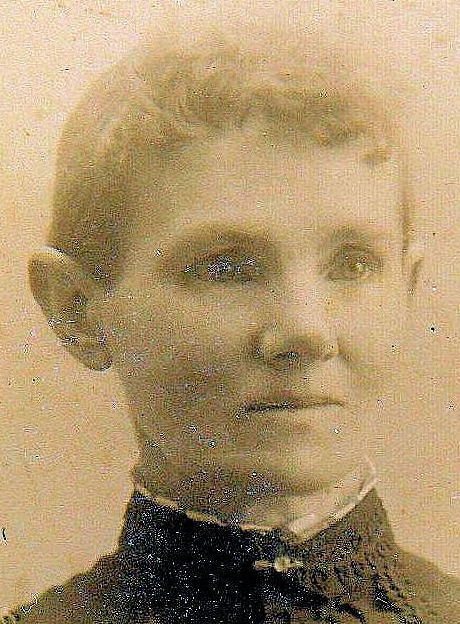
Mary Morgan-5

Mary Morgan Hayner born October 21, 1871

 Once again, I have another family story that I wish had been recorded and communicated. I wish I could have an hour to talk to Robert Wesley to ask him how he protected his family. Or to have a cup of tea with Dorothy and to talk to her about how she felt and what she did to protect Addie and her unborn child, Mary. It is amazing to look back 149 years and see the dangers that each of these families faced. 

The content of this blog was used on a different site a few years ago…. When I first wrote this blog, I talked about how different the dangers that a family faced in 1871 were from the dangers we face today.   But ironically the fires in 2020 in Australia, made me think of the fires that ravaged Michigan so long ago and made me realize that these dangers are not so different after all. When all the conditions are right, Mother Nature can create the perfect storm.  

Happy Hunting,

Jan

52 Ancestors in 52 Weeks – Week Eight – Prosperity – Part 2

52 Ancestors in 52 Weeks – Week 8 – Part 2

Another look at Prosperity ….

Back in the winter of 2017, I came across an a smart phone app that I thought might help me break through some of the brick walls which i had in my family history research. Some where in my research I came across a blog post which talked about a new smart phone app that Ancestry had made available, called “We’re Related”.

At this time in my research I had hit a lull. I was not finding much in the way of new information. I just was not making much headway with my research. It seemed as though I kept looking at the same data over and over again.

SO I looked into  the new app.  I discovered that it was a data crawler type application. When I worked in the computer industry, programmers used them to search for data in a company network or on the internet. The program looks at a set block of data, in this case, your family tree, and searches all the databases it can find for any data that matches the data in your tree and then reports the matches back to you.

So I loaded the app on my phone and started it. The criteria was that you need a smart phone with the “We’re Related” app loaded, an active Ancestry.com account and a family tree loaded on Ancestry.  So I got my most current family tree loaded. I had always used my father as my home person in my tree. Well, that played havoc with the app and made it difficult for me to know who was related to who so after a few weeks of running the app, I made the home person ME and restarted the app and the data began to flood in.

At first I was able to look at the data as I got it, do a bit of research and I could tell if it was accurate or not.  One database that is used for the comparison comes from user submitted family trees. Some user trees have mistakes in them. You must always double check data for accuracy.  What I liked about the data that I received  was that it gave me clear paths for research. It would give me a linage of a famous person and it would show me how the app determined how I may be potentially related to them. I was able to prove the accuracy of the data or in some cases disprove the connection.

Now at this point I need to remind you that the search algorithm will continually search. Eventually, I was receiving so much data, I could not keep up . I started a spreadsheet. I put all the Maternal data in one and the Paternal data in another and I based my daily research on data from these spreadsheets.  As time went on my hits did become less frequent but I still got some weekly.

I knew that I was not the only researcher using this tool and I could not help but wonder what all these data crawler search algorithms were doing to the Ancestry.com databases and their network. I presumed that it was this app that assisted in the research that was being used for the Television show “Who do You Think You Are?”

My interest was not so much in the famous people that I was possibly related to, though it was mildly amusing, my interest was in the people within my linage that they identified but I had not found yet. It was these people who were my brick walls and with this new information I was able to break down some of those walls. It was these people that I focused my day to day research on, proving that I was or was not related to them.

Last summer I finally replaced my old smart phone with a new one. When I went to the app store to look for the “We’re Related” app, it was no longer available. My search algorithm and all of the hundreds of thousand of others must have been too much for Ancestry’s network. BUT I have a spreadsheets of data that I have saved that I still use for research.

Listed here are a few of the families connections that I have found through the use of the “We’re Related “ App. They are early Colonial Family who go back to nobility in England, Ireland and Scotland. They are on both sides of my family. They were prominent colonial families in these early settlements and some were appointed to leadership positions in the early colonial government.

leet-coat-of-arms-leet-family-crest-6

Governor William Leete (1612-1683)

William Leete (1612-1683) was one of these early setters. He arrived with Rev Whitefield’s company and was one of the early Plantation Covenant signers while still aboard the ship on June 1, 1639. They arrived in New Haven (Connecticut) a month later on July 1. He was one of six men selected to negotiate a land treaty with the native tribes for the purchase of the land for the new settlement. The new settlement consisted of several planned plantations.

William was called upon to serve many public offices in the early colonial settlements which later became Connecticut. He was the clerk of the New Haven plantation from 1639 – 1662. He was appointed as a deputy to the colonial court representing the plantation of Guilford until 1650 and was then appointed magistrate of Guilford from 1651-1658. In 1658, he was appointed Deputy Governor until he was elected Governor of the plantation in 1661. He held the office until 1664 when the plantations of Guilford, Stamford, Milford, New Haven and several others, merged and became the colony of Connecticut. After these plantations merged, he served as an assistant until he was elected as deputy governor. He was elected as Governor in 1669 and served in that capacity until his death in 1683. This family connection is on the father’s side of the family.

While investigating the Leete side of my family, I found church records which enabled research to date back several more generations in England. William’ s 2X Great Grandfather is Thomas Leete(1520-1582) he was married to Lady Dorothy of Warde.   (1528-1587) It is because of the connection to nobility that ensures that there are records that can be found. Thomas and Dorothy are my 12 times Great Grandparents.

Thomas Leete(1520-1582) => Thomas Leete(1554-1616) => John Leete (1575-1648) => Governor William Leete (1612-1683) => Andrew Leete => (1643-1702) => William Leete (1671-1736) => Roland Leete (1708-1767) => Ashel Leete => (1755-1791) => Jonathan Leete (1775-1861) => Nancy Leete (1814-1900) => Austin Boyer (1848-1908) => Mae Eveleen Boyer (1883-1914) => Lillian Losee (1905-1980) = Harold Smith (1929-1996) => Janet L Smith.

In this same area of Connecticut in the same time period as Governor William Leete, I have found several lines of my Mother’s family as well. I have spent considerable time researching the Reynolds family connection.

df8c527dd3e59e97b1518b6528610ef6

George Reynolds was an interesting character who is well researched. His life was documented by his youngest son, Jay Lincoln Reynolds. My family descends from Georges oldest daughter, Sarah Louise Reynolds Densmore, who was 22 years older than Jay Lincoln, her brother. George ‘s wife, Margaret, died when the youngest son, Jay, was four years old. Jay Lincoln spent much of his young life being raised by older sisters. He spent months and sometimes years with each of his sister and blended into their families. He had frequent visits from his father and as a preteen he returned to the live with him during the final years of George’s life. The eleven year old Jay and his eighty year old father cared for each other. It was of this time period that Jay Lincoln fondly, chronicled his fathers life.

The Reynolds family is traced back to my 9th Great Grandfather, George Reynolds born in 1555 in Kent, England. His son, John Reynolds came to America as a freeman in 1635. He settled in Watertown, Massachusetts before leaving to settle in Stamford, Connecticut within a year or two of his arrival. The “We’re Related” app was my connecting source which enable me to validate the link back from William Reynolds to George Reynolds of 1555.

George Reynolds (1555-1634) => John Reynolds (1590-1664) => John Reynolds (1638-1701) => John Reynolds ( 1674-1750) => John Reynolds (1699-1789) => William Reynolds (1735-1810) => George S Reynolds (1774-1874) => Sarah Louise Reynolds (1836-1918) =>Charles Densmore (1864-1943=> Addie Densmore (1890-1955) => Leah Anderson (1928-2009) => Janet Smith

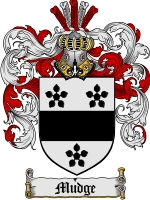
William Reynolds, my 4 X Great Grandfather and the father of George S Reynolds, was married to Elizabeth Mudge. Elizabeth’s family can be traced back to Jarvis Mudge who was born in England in 1608 came to America from England by the time of 1638 when his name is found in Court documents in Boston, Massachusetts. He was among the founding members of Hartford, Connecticut.

mudge-coat-of-arms-mudge-family-crest-7

Elizabeth Mudge’s father was Micah Mudge and her mother was Lucy Spencer. The Spencer’s are well documented back to 1015AD. This is likely the same Spencer family that the Princess of Wales, Diana Spencer descends from. There are several databases who document Royal families and Nobility in Europe. One such database I could follow back to a thirty-three times Great Grandfather through this Spencer line. I found this interesting but the volume of work that it would take to prove its accuracy was daunting. I was able to prove the validity for several generation but have so much other work to proof that this can be left for a later date if I ever pursue it.

Micah Mudge’s Grandfather was Micah Mudges and his wife was Mary Alexander. Mary Alexander’s family come from the Alexander Noble family from southern Scotland. They family is well documented in the Royal database as well. They descend from the ancient McDonald clan who lived in southern Scotland near Edinburgh and Glasgow at the time of William the Conqueror.

alexander-coat-of-arms-family-crest-1

SO as you can see that data crawler program spit out enormous amounts of data for me to work with. It did nothing for my biggest dilemma, my Smith Family! There are just too many of us. We are all common folks. We are not celebrities. We make up a vast population of people whose surname were derived from their occupation and it is known that immigrants who want to start over in American sometimes just declared themselves a “Smith”.

Happy Hunting,

Jan

52 Ancestors in 52 Weeks- Week Eight- Prosperity – Part One

Prosperity is a noun which is by definition  a the state of being prosperous;  Wealthy, successful, profitable, affluence, the good life, good fortune, life of luxury, plenty….. according to the web site http://www.dictionary.com.

This is another interesting and thought provoking topic this week. I like to give my self time to think about the weekly topic. This week my first thought was…I have nothing to write this week!

Most of my ancestors were common hard working people. They came to America looking for a better way of life. They certainly hoped for prosperity, a good life and maybe a bit of good fortune that they believed they could not find where they were living. They came looking for a piece of land that they could own or a job that they could do to provide better living conditions for their family. They were looking for opportunities that for one reason or another had eluded them in their homeland. They were hopeful, hard working people.

They received land, improved it and farmed it. They were people who provided basic services that enriched the lives of others. They were blacksmiths, wagon makers, tailors, cobblers, inn and store keepers, milk maids, circuit riders and clergy. They worked on the early railroad and in the auto industry. They were builders, masons and years later, electricians and plumbers.
And when they needed to fight for the freedom that their newly adopted country brought to them, they did. They served in the Revolutionary War, the War of 1812 and the Civil War. They were the common folks who thru hard work and dedication to freedom contributed to the forming of this great country of ours. They were all very prosperous people in their own right. They may not have fit the definition that I listed above in the eyes of other people but in there own eyes and mine, they were prosperous.

52 Ancestors in 52 Weeks – Week 7 – Favorite Discovery

This is a hard topic because in 24 years of this journey, I have had many favorite discoveries! Each favorite discovery was the catalyst for the next favorite discovery but I will today try to focus on the events that lead up to one of my earliest ones. This discovery came in 2003 along with the another favorite discovery, the fact that my Smith Family ancestors were instrumentally involved in the founding of the the Nine Mile United Methodist Church in Indiana. Of the sixteen found members, twelve of these members were directly connected to our Smith family.

In 2003, I had been visiting my son and his family in Michigan. I was living near Chicago at the time. On my return home, I decided to take a detour. Instead of exiting I-69 onto I-94 and heading west to Chicago, I decided to continue south to Fort Wayne, Indiana area. Nine Mile Indiana is just south and west of Fort Wayne. I had made good time so far on my journey home. I had no deadline for getting home and I calculated in my head that I could spend an hour or so trying to find this church and the graveyard that I thought my Ancestors may be in.

NineMIle United Methodist Church-2

So I headed south and after about 30 minutes or so found my exit, then the church and graveyard. The graveyard was a good size but I went in search of the oldest stones in the cemetery. It was then that I found James Smith and his children, Mary Ann, Kesiah, Charles, Barbary and a granddaughter Susannah. I had taken some pictures and wandered the cemetery for a bit to see if I found any familiar names. After thirty minutes or so I thought I ought to get back on the road.

As I was getting ready to leave, a nice woman came from the house across the street to see me. It turned out that she was the pastor of the church. We visited briefly. I explained what I thought was my connection to this area and the church. She asked if I wanted to go into the church, she would unlock it for me. I told her that I would love to. I asked if there was a restroom that I could use before I started my journey to Chicago. It would surely take me a bit longer to get home now. I would be traveling on I-80 across Northern Indiana before meeting up with the interstates that circle around the Chicago area. The interstates near Chicago would be like parking lots, jammed with commuters trying to get home from work and the last thing I would want to do is be looking for a restroom in  traffic jam!

I entered the church and found a lovely sanctuary for worship. It had beautiful windows and a wonderful painting behind the alter. I sat quietly in the pews feeling a special energy as it surrounded me. The tears flowed peacefully down my cheeks. I was moved in a way that I had never felt before. People were speaking to me and assuring me that I belonged there. Minutes drifted, five minutes, ten minutes and before I knew it I had sat there thirty minutes lost in my thoughts. It was as if a strong magnet kept me firmly planted on that pew. In that moment I knew this would be a place I would return to again and a again.

I left the peace of the sanctuary to see if I could find the restroom. The pastor had told me it was down in the basement in the far corner. So I followed the stairs down into the dark abyss of the basement. Placing my hands on the walls, feeling my way down the stairs, I carefully stepped on one stair at a time with the hope of finding a light switch. At the bottom of the stairs, I found one. I flipped the switch and it turn on a ceiling light in the middle of the fellowship hall. Just enough light to show me a path to the bathroom door across the room.

The room was your typical fellowship hall with a small kitchen area and several tables for people to gather. It looked like they were used regularly for what appeared to be adult christian education or Bible study. Nothing seemed to be geared towards children’s Sunday school lessons. To my right as I exited the restroom towards the stairs, I could see something hanging on the wall. I decided to find a few more light switches to get a better look at this room. Once I found them and turned them on, the room was now nicely illuminated. My attention was drawn back to the wall next to the stairway.

Exif_Jpeg

Hanging on the wall was a 1906 quilt made by the Ladies Aid Society. My other passion in life is quilting. I had trouble containing my own excitement. I stepped forward to get a better look at this quilt. The blocks were called Crazy Quilt Blocks which were common at the turn of the century. There really wasn’t a pattern for each block. They just kept adding fabric until the block was the size that they wanted. Then the blocks were sewn together to form the quilt.

Much to my surprise, each small piece of fabric in the 20 blocks of this quilt had a name or two hand embroidered on it. At this point in my search, I did not know for a fact that this was my family church but the energy in my body told me that it was! So I got my camera out once again and started taking pictures. First the whole quilt and then close ups of each of the blocks. I had to record this information. I did not know who on the quilt would turn out to be related. This was a snapshot of the people who belonged to this church in 1906. A snapshot of the people who lived in this area 59 years after my family came to the area and formed this church.

I spent the next few weeks and months trying to record all the name on each block. There are one hundred and twenty three families and two hundred and sixty three church members listed on the quilt. My intention was and still is some day to put these families and this quilt in a book.

By now, my quick hour long detour has lasted for several hours, much longer than I had planned but every minute of my time spent in that church that day is today cherished as a favorite discovery!

Happy Hunting,

Jan

When I went to write this post I realize that I did not have all the photos of the blocks on my external photo  drive. It may be that they are not in digital form.  They may been some of the last prints that I had developed and maybe hanging out in a photo book somewhere. It was about this time when we bought a new camera which enabled us to save our photos digitally on out computers.  If i can not locate them then it looks like I will need to take a road trip this summer to get these pictures. It has been a while since I have visited my family church.

#52ancestors


52 Ancestors in 52 Weeks

My brick wall is James Smith. Could it be any more difficult or common than that? Just the surname Smith is bad enough but add the given name James! I can go back many generations on many other lines of my family but James Smith is my shortest lineage and a 26 year road block.

SO here is the problem. My James Smith is like all the other James Smith. There were thousands of James Smiths in 1809 in America. They all seem to have had sons named William, John, James, Joseph, Charles, and Henry.  James first son was named William which leads me to think that his father may have been a William Smith.  Try looking for a William Smith. Try looking for James when the birth year is different on each census records. Try looking for him when death records of his children report that he was born in different states. Try looking for a “Needle in a Haystack”. I guess you understand why my blog is named what it is.

James died in 1868 before Indiana issued death certificates. He is buried in the Nine Mile Cemetery with several of his children; Barbary, Charles H. and Kisiah whose deaths preceded him. They are all listed on one large stone. The year that Barbary was born and died is unknown. It is believed to have been after 1857 and the baby died at eight months old. She was likely one of the earliest graves in the cemetery.  The property was deeded to the church and the church found in 1853. Kisiah died in 1861 at the age of nineteen.

Exif_Jpeg

Mary Ann and Susannah’s stone is growing out of this tree.

Another daughter, Mary Ann Smith Kimble and her daughter Susanna died in March and May of 1863 and were also buried in the cemetery in the Smith plot. Mary Ann and her husband Jonathan, had lived in Fort Charlotte, Ohio according to the 1860 Census records. Charles was also buried in 1863. I have scoured the Civil War records to see if he was a causality. I do find a Charles Smith from Indiana who died in 1863 but I can not confirm that this is the Charles Smith that I am looking for. Enlistment records don’t quite give you enough information to positively identify someone.

The church has very few of the original burial records. The county has transcripts of all the stones. The Smith stone in question was in multiple pieces for many years.

J-S-BarberrySmithcp-2

Top half of the Smith Stone


Exif_Jpeg

The bottom half of the Smith stone with the children’s names on it which was still in the base.

Stoneplacement-Aug-2012

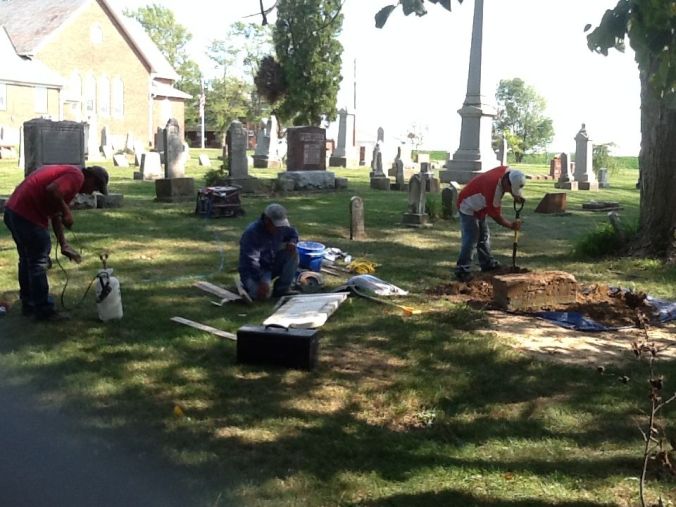
Mark Davis  and his crew from Stone Saver Cemetery Restoration working on this tombstone.

There were so many pieces that I thought there were two stones,  Mark Davis from Stone Savers Cemetery Restoration fixed the stone for me and it was determined that it was one large stone.  Mark and his crew did a great job and his company restores old pioneer cemeteries all over the state of Indiana.

Susanna, James’ wife, was supposed to have been buried with him. Her name is on the stone but there are no dates or age at death to signify that she was actually buried there. The church has no record of her being buried there. She may have died as much as twelve years later. She was found in the 1870 Federal Census and not in the 1880 Federal Census.

James Smith-NineMile

James Smith is the reason I did DNA testing. In 2010, I did my first series of DNA testing. It was costly but I was so hopeful that is would eventually help me. My Brother did the Y-DNA test and I took the mtDNA. My test showed that our Maternal haplogroup was H (the Colonists) which meant nothing to me then. I had great hopes that my brothers Y-DNA 46 test would be lots of help. I patiently checked for matches but the Ancestry database was pretty small in 2010. The test results told us that our haplogroup was Rb1, the Artistans.

Ten years ago, DNA tests were very different than today. Besides the fact that they cost a lot more, you had a variety of tests you could choose from. You could purchase a 12 marker test, and 24 marker test, a 46 marker test or a 64 marker test. ( I think those were the number of markers)The larger the number of markers tested the more accurate the test. Or so I was told. I opted for the 46 marker test in hopes that it would give me more data to work with. At that time the database overall was pretty small in comparison to today.  It matched me up with Musgraves, Shepards, Stephensens, Adams, and others names which I no longer remember. I wish I had recorded them, but the reality was there was not a single Smith!

Somewhere in the 2012 time frame, Ancestry decided that they would change the number of markers that they would examine for DNA testing to a standardized amount. They claimed that they were over testing for what would work best for the majority of the population. As I recall they standardized their testing to accurately predict for 5 generations. I was notified but I did not understand what they were telling me.

I had contacted some of the people that were early matches and we never really figured anything out. But I did not record that data because I thought it would always be available through Ancestry. At some point I went out to Ancestry and I could see my brother’s raw test results but it was no longer being compared because the database had been changed and there was nothing you could compare it to. I boycotted redoing the test for many years but eventually gave in and redid my test in 2018 getting the results in 2019.

Years ago I loaded the raw data from my brothers test into a couple of other databases. None of them are as large as Ancestry’s database today but I eventually got one hit. It has told me one thing. He is likely a half brother or first cousin to a Smith Family group who left Darke County in the 1830’s. This family settled in Benton County, Indiana. There are some people on Ancestry that believe that they have identified James’s father but my one DNA match says that it is not him. I have asked each of these researchers for the source data which they used to make this connection and I have not gotten an answers. I keep looking for matches. I have some from the descendants of James and Susannah but James’ father and mother still remain a mystery after 26 years.

Happy Hunting,

Jan

#52ancestors